Keyword Research · Cluster Guide
Keyword Research: A Step-by-Step Guide for 2026
Every new client wants to rank for the biggest, broadest term in their category. Almost none of them should start there. This is the keyword research process we actually run — and the uncomfortable math behind why the "obvious" keyword is usually the wrong first target.
Keyword research is the process of identifying the actual terms your audience searches, and the intent behind each one, so you can prioritize content that has a realistic chance of ranking and converting. The single biggest mistake is chasing high-volume “head” terms first — long-tail keywords make up the overwhelming majority of real search queries and consistently convert at a far higher rate.
The Keyword Everyone Wants, and Almost Nobody Should Chase First
New clients arrive with a keyword already in mind, and it's almost always the same shape: broad, high-volume, and brutally competitive. "Digital marketing." "SEO services." "Best restaurant Chennai." The instinct is understandable — that's the term with the biggest number attached to it in whatever free tool they checked. It's also, for the overwhelming majority of businesses, the wrong place to spend the first month of effort.
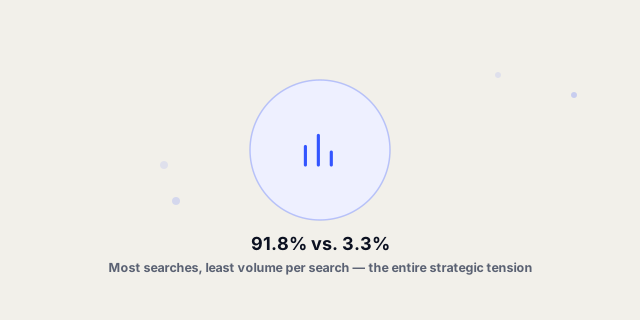
Here's the number that changes the conversation every time we walk through it: Backlinko's analysis of over 306 million keywords found that 91.8% of all search queries are long-tail — yet those long-tail terms collectively account for only around 3.3% of total search volume. Sit with that for a second. Almost every real search a human types is a long-tail phrase. The handful of massive head terms everyone wants absorb enormous volume individually, but they represent a tiny fraction of how people actually search.
“Chasing the keyword with the biggest number is how a brand-new site spends a year competing with domains twenty times its age, for a term it was never going to win anyway.”Chenthil Kumar, Digimarketlabs
Step One: Start From Intent, Not Volume
Before checking a single search-volume number, sort what you're researching into the intent behind it:
- Informational — someone learning about a topic ("what is technical SEO")
- Navigational — someone looking for a specific brand or site ("digimarketlabs seo service")
- Commercial investigation — someone comparing options before deciding ("best SEO agency for SaaS")
- Transactional — someone ready to act ("hire SEO consultant Chennai")
A page built for informational intent that gets ranked for a transactional search converts terribly, and vice versa — matching intent correctly matters more than the raw volume number attached to any keyword.
Step Two: Build the Long-Tail List First
Instead of one broad head term, build a list of the specific, multi-word phrases real people actually type — the ones with lower individual volume but dramatically less competition and a much clearer signal of what the searcher actually wants. Tools help here, but so does simply reading your own support tickets, sales call notes and customer questions verbatim — the real language customers use is often more accurate than anything a keyword tool surfaces.
Want a keyword strategy built from real data, not guesswork?
We'll map your priority keywords by intent and realistic opportunity before a single article gets written.
Step Three: Check Competition Honestly
A keyword difficulty score is a useful directional signal, but the more reliable check is manual: search the term yourself and look at who's actually ranking. If the first page is dominated by domains with years of established authority, that's a signal to build supporting long-tail content first and earn your way toward the harder term later — not a reason to avoid the topic altogether.
Step Four: Cluster, Don't Scatter
Related long-tail keywords should feed one strong, comprehensive page rather than spinning up a thin, separate page for every phrase variation. This pillar-and-cluster approach — a comprehensive core page supported by focused related content, all interlinked — is exactly the structure behind this entire guide series; see our complete guide to SEO for the hub all five of these cluster articles support.
Step Five: Prioritize by Realistic Opportunity, Not Just Volume
The final list should rank keywords by a combination of three things: how directly the intent matches what you actually offer, how competitive the current top results genuinely are, and how much content investment the topic deserves given your business priorities. A lower-volume keyword you can realistically win this quarter is worth more than a high-volume one you might win in three years.
The Process, Summarized
- Sort every candidate keyword by search intent first
- Build the long-tail list before chasing head terms
- Mine real customer language from support tickets and sales calls
- Check competition manually, not just via a difficulty score
- Cluster related keywords into one strong page instead of scattering them
- Prioritize by realistic opportunity, not raw search volume
FAQ
Keyword research questions, answered directly
Should I ever target high-volume head terms?
Eventually, yes — but usually after building topical authority through long-tail content first, not as a starting move for a newer or lower-authority site.
What's the difference between a long-tail and a short-tail keyword?
Long-tail keywords are typically three or more words and highly specific; short-tail (or "head") terms are one or two words, broad, and far more competitive relative to their traffic potential.
How many keywords should one page target?
One primary keyword and a cluster of closely related long-tail variants and questions — not a scattered list of unrelated terms stuffed into a single page.
Do free keyword tools give accurate data?
Directionally, yes, though absolute volume numbers vary between tools. What matters more than precision is the relative comparison between keywords and a clear read on search intent.
Want a real keyword strategy, not a spreadsheet of guesses?
Book a strategy call and we'll show you the long-tail opportunities your competitors haven't found yet.
Sources & further reading
Where this guide draws from
Keep reading